Overspeaking Judges: Gujarat High Court Chief Justice and Bar President in Heated Exchange
A heated exchange between Gujarat High Court Chief Justice Sunita Agarwal and Advocate Brijesh J Trivedi has sparked debates about judicial decorum and bar-bench relations. Explore the incident, its implications, and insights into maintaining professionalism in the courtroom.
Overspeaking Judges: Gujarat High Court Chief Justice and Bar President in Heated Exchange
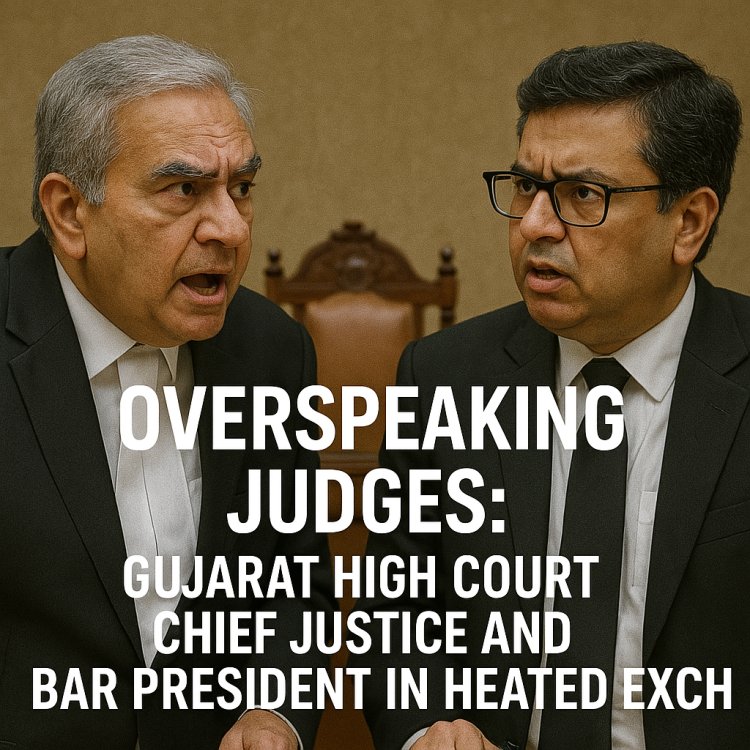
Recently, a courtroom incident in the Gujarat High Court drew attention across the country. A heated verbal exchange took place between the Chief Justice of Gujarat High Court and the Bar Association President, raising serious concerns about courtroom decorum, judicial conduct, and the balance between the Bench and the Bar.
What Happened in the Gujarat High Court?
The issue started during a routine hearing when the Chief Justice reportedly interrupted the Bar President several times. What began as a disagreement over courtroom procedure escalated into a heated exchange. Many legal experts viewed this as a case of judicial "overspeaking", where the judge’s tone and repeated interruptions were seen as undermining the Bar President’s right to be heard with respect.
This situation reflects growing concern in the legal community about maintaining mutual respect between the judiciary and the legal fraternity. Such exchanges can impact ongoing cases and shake public confidence in the justice system.
Types of Cases Related to Judicial Conduct and Overspeaking
Legal issues around judicial behavior, courtroom decorum, and professional misconduct are complex and sensitive. Some types of cases that may arise in this context include:
-
Contempt of Court – Against advocates or in rare cases, judges who cross limits
-
Judicial Misconduct Complaints – Filed with higher judiciary or judicial commissions
-
Bar Council Disputes – Between senior advocates and bar associations
-
Writ Petitions – Filed in High Courts for fair hearing rights or judicial overreach
-
Public Interest Litigations (PILs) – In case larger public interest is involved
-
Disciplinary Hearings – Against legal professionals by regulatory bodies
Our legal team has handled such matters with tact and confidentiality, always focusing on justice and professional respect.
Legal Certification and Expertise Required
Handling cases involving judicial conduct or professional ethics demands a high level of legal expertise and a clear understanding of judicial protocols. Lawyers dealing with such matters must have:
-
Law Degree (LL.B.) from a reputed institution
-
Bar Council Registration
-
10+ years of courtroom experience, preferably in High Courts or Supreme Court
-
Knowledge of Constitutional Law and Contempt Law
-
Experience in Bar Council Proceedings
-
Calm demeanor and respect for legal decorum
At advocateinjaipur.com, our legal experts are qualified and experienced in handling such sensitive matters while maintaining the highest level of professionalism.
Case Study: Defending Fair Hearing Rights in a High Court
Client: Senior Advocate in Rajasthan
Issue: Denial of proper hearing and frequent interruptions by a sitting judge
Approach: Our team filed a writ petition under Article 226 of the Constitution, arguing for a fair and respectful hearing. We also submitted a confidential complaint to the judicial oversight committee.
Outcome: The matter was transferred to another bench, and the client received a fair hearing. The oversight body acknowledged the need for judicial restraint in its recommendations.
This case highlights how legal remedies can be used to protect professional dignity without disrespecting the court.
Frequently Asked Questions (FAQs)
Q1. What does “overspeaking judge” mean in legal terms?
It refers to a judge who unnecessarily interrupts or dominates court proceedings in a way that may be seen as disrespectful or obstructive to advocates or petitioners.
Q2. Can I file a complaint against a judge?
Yes, complaints can be made to the Chief Justice of India, respective High Court authorities, or judicial accountability forums—but only with proper legal consultation and supporting facts.
Q3. Is it risky to speak against judicial misconduct?
While there are risks, the law provides safeguards for advocates and petitioners who raise valid concerns respectfully. Our lawyers ensure that your rights are protected while keeping the approach legally sound.
Q4. How do I handle being unfairly interrupted in court?
You may request a respectful hearing or file a motion in the same court. In serious cases, a writ petition or review petition can be filed with the help of a senior advocate.
Q5. Can Bar Association members take legal action?
Yes, Bar Association leaders can file official representations or legal petitions if they feel the court’s behavior affects the legal community at large.