Best Debt Recovery Lawyer in Ajmer
Have you lent money and the borrower is not returning it? Are clients not paying your business dues on time? Our expert debt recovery lawyers in Ajmer are here to help you take legal steps and recover your money. We also provide advocate service in other city like Best Advocate For Service Matters in Bagru, Jaipur.
What is Debt Recovery Law in India?
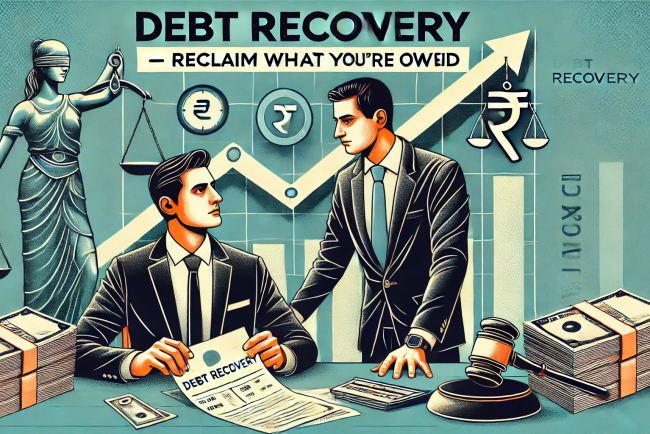
Debt recovery law helps individuals, businesses, and financial institutions to recover money that is legally due from someone. This includes cases like:
-
Unpaid loans
-
Personal lending disputes
-
Business transaction dues
-
Dishonoured cheques
-
Unpaid invoices or bills
Common legal paths used for debt recovery:
-
Legal Notice under Civil Procedure Code
-
Money Recovery Suit in Civil Court
-
Cheque Bounce Case under Section 138 of NI Act
-
Arbitration or Settlement
-
Insolvency and Bankruptcy Code (for large amounts)
-
DRT (Debt Recovery Tribunal – for banks & NBFCs)
Types of Debt Recovery Cases We Handle
Our experienced debt recovery lawyers in Ajmer handle:
- Personal Loan Recovery
- Friendly Loan Recovery (no agreement)
- Business-to-Business Debt Cases
- Cheque Bounce & Dishonoured Payments
- Construction & Vendor Payment Issues
- Rental Dues and Lease Disputes
- Loan Default by Friends/Relatives
- Advance Paid but Service Not Delivered
- Recovery from Defaulters, Suppliers, Buyers
Whether you are an individual, a startup or a company — we can handle your case with full confidentiality and care.
Key Indian Legal Sections Used
Debt recovery usually involves civil and criminal laws, including:
-
Section 138, 139, 142 of Negotiable Instruments Act – Cheque bounce
-
Order 37 CPC – Summary suit for fast-track recovery
-
Section 73, 74 Indian Contract Act – Compensation
-
Civil Procedure Code (CPC) – Filing of recovery suits
-
Indian Penal Code (IPC) – Criminal breach of trust (in some cases)
-
Insolvency & Bankruptcy Code (IBC) – For bigger recovery claims
Required Documents for Debt Recovery
To recover debt legally, you will need:
-
Proof of lending (agreement, cheque, transfer record, etc.)
-
Borrower's details (ID, address, phone)
-
Bank statements showing payment
-
Cheque copies (if bounced)
-
Communication (WhatsApp, email, chat)
-
Legal notice (we will draft it)
-
Business invoices (for commercial cases)
Don’t worry if you don’t have all documents. Our lawyers will advise you on how to proceed with limited proof as well.
Our Legal Expertise & Certification
- Practicing lawyers in Ajmer Civil & District Courts
- Registered with Rajasthan Bar Council
- 1000+ successful debt recovery matters handled
- Legal notice drafting, court filing, and hearing support
- Fast-track recovery through Order 37 suits
- Cheque bounce experts
- Strong follow-up and court execution
We offer result-oriented and ethical debt recovery legal solutions.
Case Study – Business Debt Recovery
A small manufacturer from Ajmer
Issue: ?4.5 lakh due from a wholesaler who refused to pay after delivery
Action: We sent a legal notice, filed a civil money suit, and initiated cheque bounce case
Result: The client recovered full dues with interest and legal cost in 5 months
This shows how timely legal action can help businesses recover dues quickly.
Frequently Asked Questions (FAQ)
Q1. Can I recover money without any agreement?
Yes, if there’s proof like bank transfers, messages, or cheque, we can build a legal case.
Q2. What is the fastest way to recover money?
Sending a legal notice followed by a summary suit under Order 37 CPC is a fast-track method.
Q3. How much time does it take to recover debt through court?
It varies. Some summary suits or cheque bounce cases are resolved within 4–6 months.
Q4. What if the borrower refuses to respond to legal notice?
We file a money recovery suit and/or cheque bounce complaint as per legal process.
Q5. Can a cheque bounce case send someone to jail?
Yes, under Section 138 of NI Act, punishment includes up to 2 years imprisonment or fine, or both.